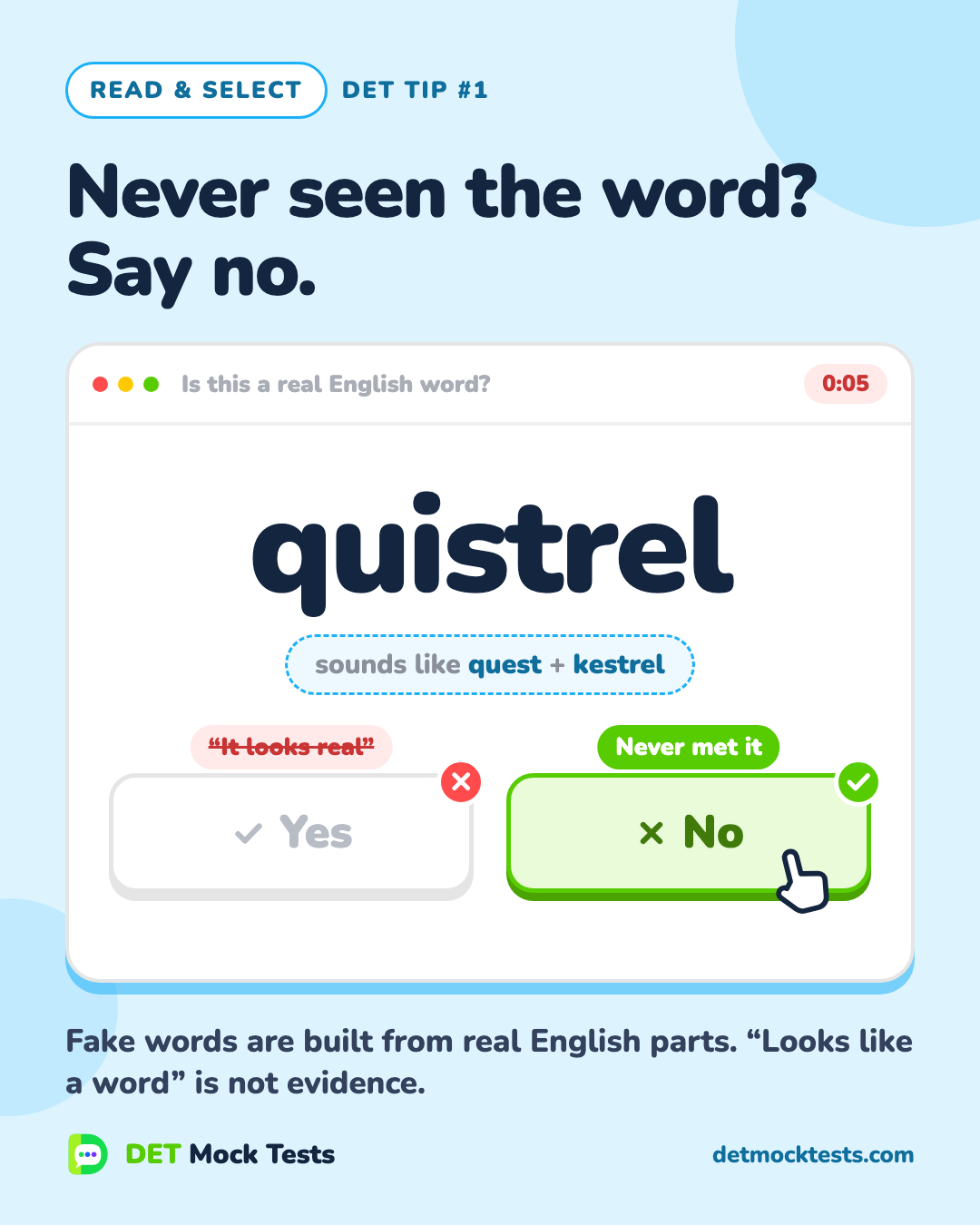
The fake words are built from real English parts, so “it looks like a word” is not evidence. Guessing yes on unfamiliar words is the most common way to lose points on this task.
On screen
Not this: “quistrel” looks real → Yes This: Never met it → No
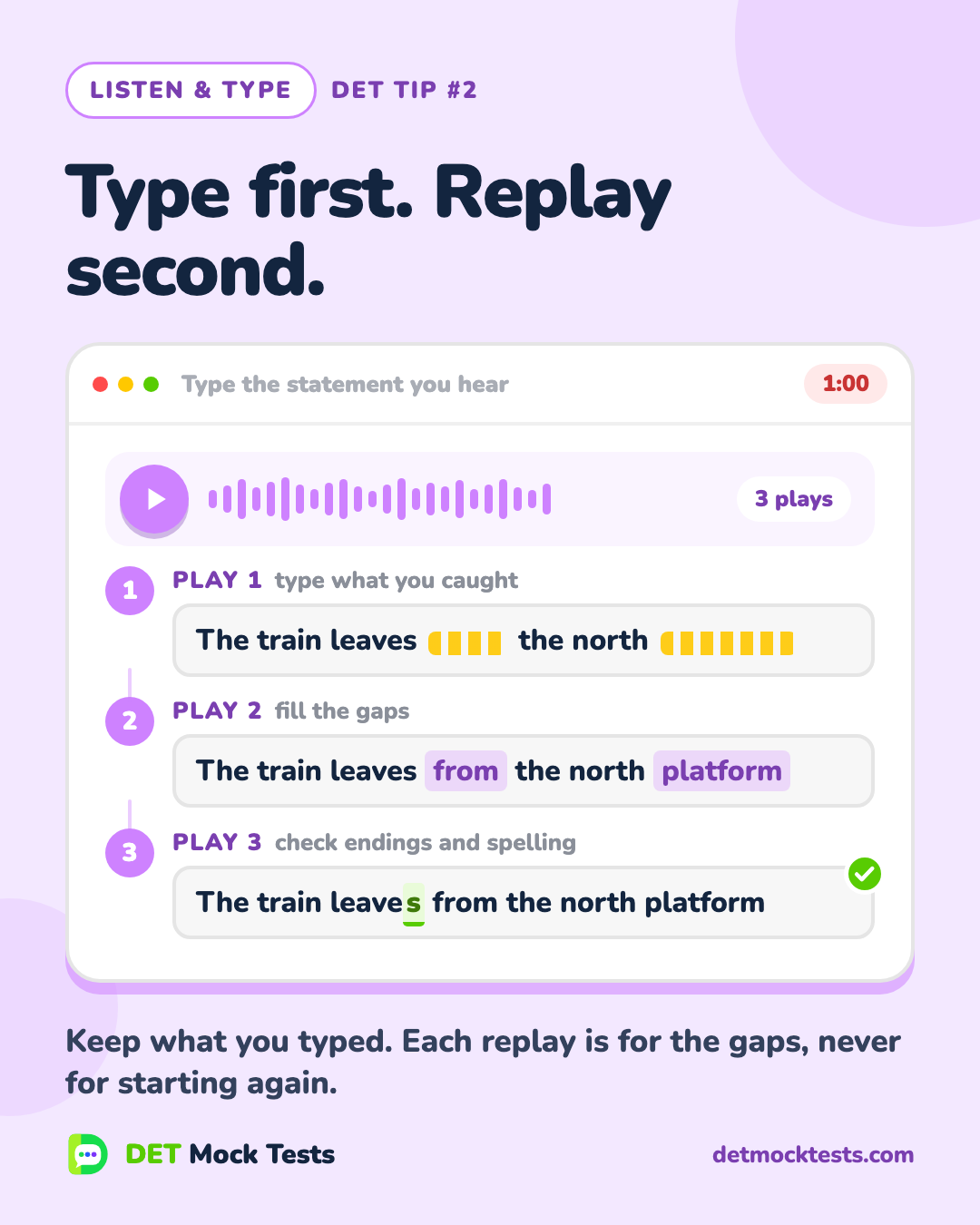
Type everything you caught straight after the first play, then use the replays only to fill the gaps. Starting over on every replay is how people run out of time with an empty box.
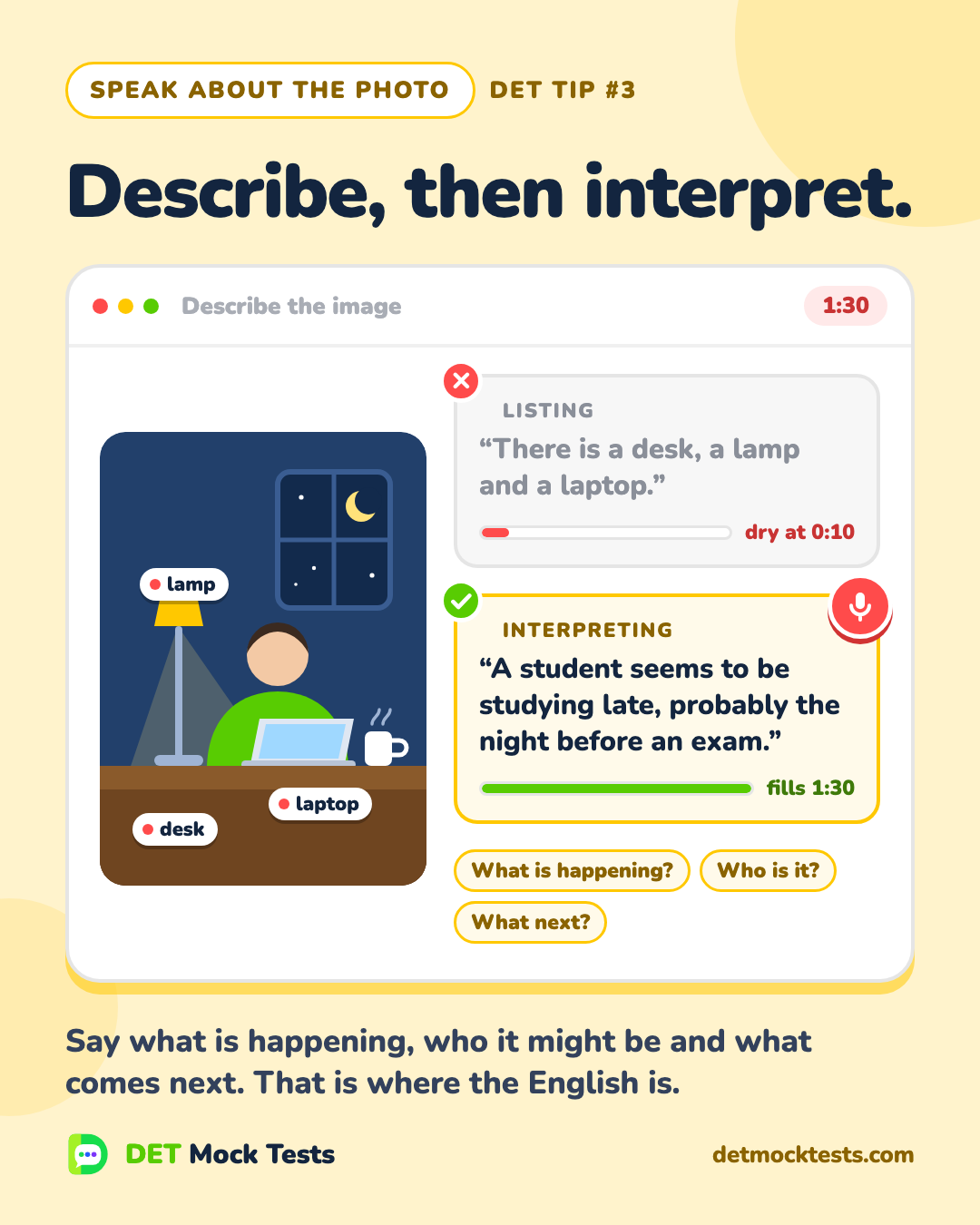
Listing objects fills ten seconds. Saying what is happening, who the people might be and what might happen next fills the time and shows far more English.
Same photo
Not this: There is a desk, a lamp and a laptop. This: A student seems to be studying late, probably the night before an exam.
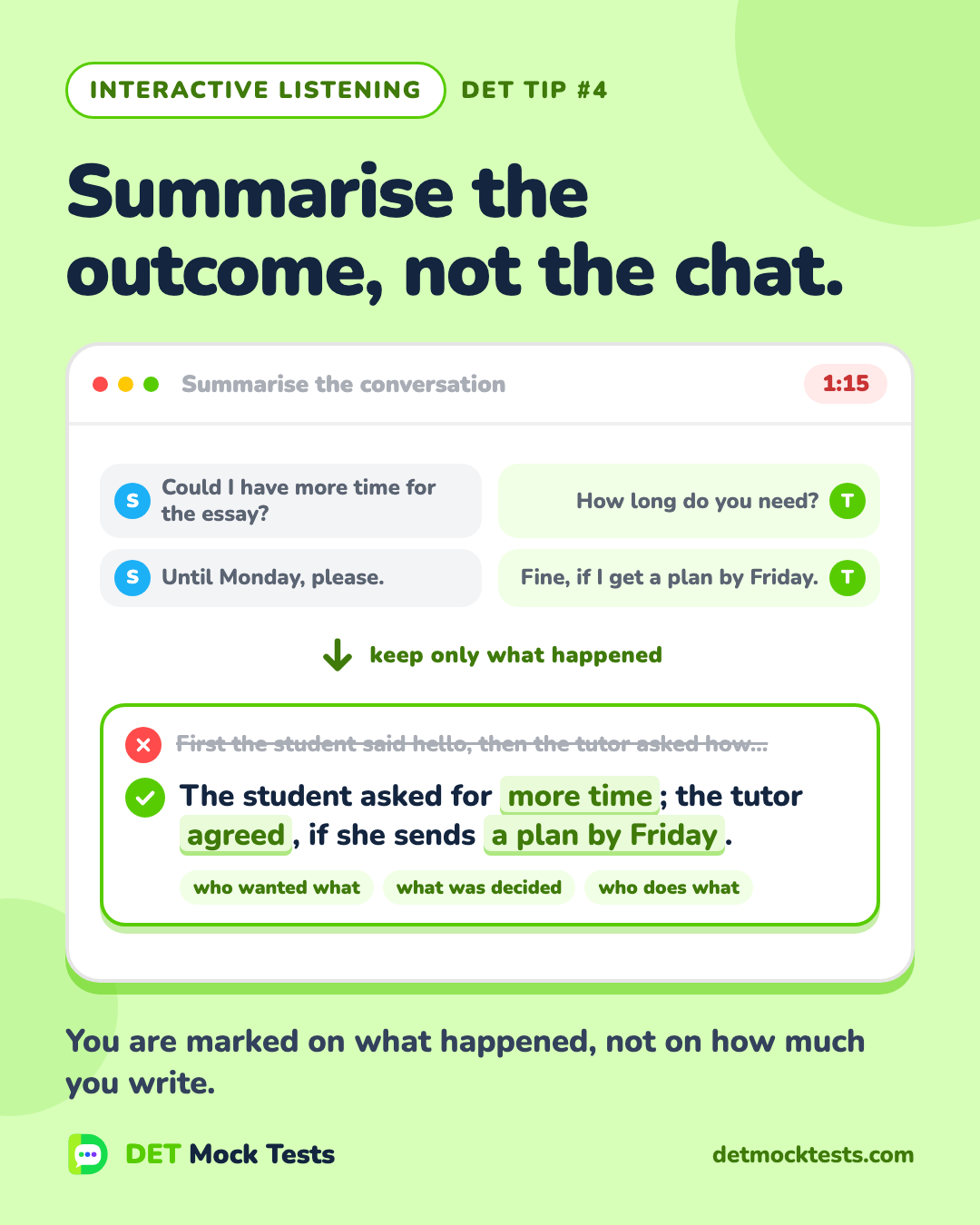
The summary is marked on whether it captures what actually happened, not on how much you write. Say what was decided and what each person agreed to do.
Summary
Not this: First the student said hello, then the tutor asked how she was… This: The student asked for more time; the tutor agreed, if she sends a plan by Friday.
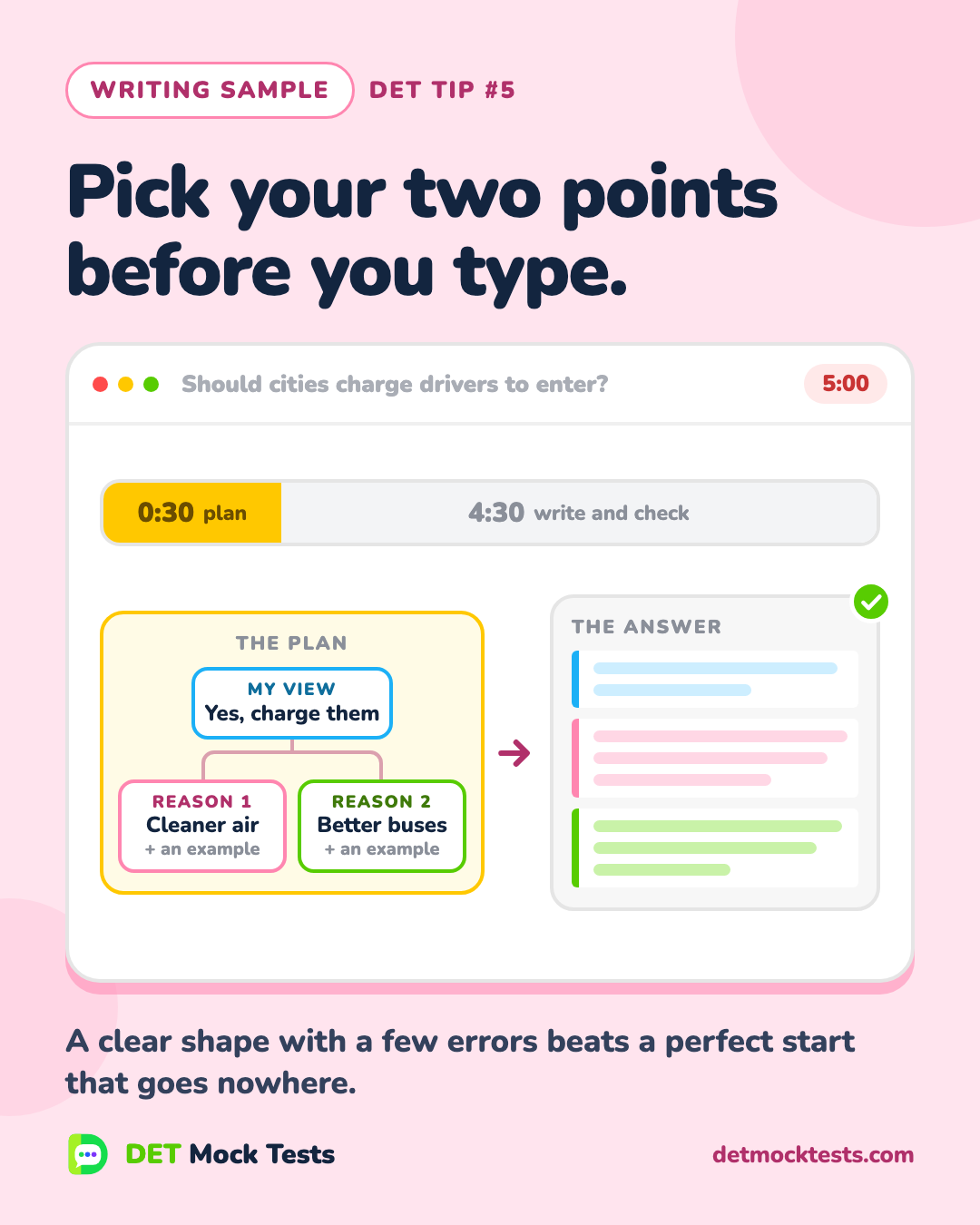
Spend the first thirty seconds deciding your position and two reasons. An answer with a clear shape and a few errors scores better than a flawless one that never gets anywhere.
These cards are short on purpose. Each one is the single habit that saves the most marks on one Duolingo English
Test question type, with an example of the wrong and the right way to do it. The reasons and more examples are in
each task's guide, linked from its card.
Use them
How to use these cards
Before a practice test: read the card for each task you find hardest, then try to apply only that one habit.
On your phone: save the cards to a folder and flick through them on the day before the test.
With friends or a class: share a card a day in your study group.
The cards may be shared as they are, with the detmocktests.com line on them:
see how our images may be used.
A clear shape with a few errors beats a perfect start that goes nowhere.
FAQ
About the tip cards
Can I share these Duolingo English Test tip cards?
Yes. Download any card and share it on Instagram, WhatsApp, a class group or a study notes doc. Please keep the card as it is, with detmocktests.com on it, and link back to this page where you can.
Where do these DET tips come from?
Each tip comes from the guide to one question type on this site, where the reasons and examples are explained in full. The cards boil each guide down to the one habit that saves the most marks on that task.
What is the best tip for the DET reading tasks?
On Read & Select, answer no to any word you have never met: the fake words are built to look real. On Fill in the Blanks and Read & Complete, work out the meaning from the sentence first, then check the visible letters. Context finds the word; the letters confirm it.
What is the best tip for the DET listening tasks?
Write as you listen. In Listen & Type, type what you caught after the first play and use replays only for the gaps. In Interactive Listening, note who wants what as the conversation goes, so your summary can state the outcome.
What is the best tip for the DET speaking tasks?
Answer the question first, then add a reason or an example. For photos, describe what you see and then interpret it: who the people might be, what is happening, what comes next. Interpretation is where the varied language comes from.
What is the best tip for the DET writing tasks?
Plan before you type. Decide your position and two points in the first thirty seconds, then give each point its own sentences with an example. A clear shape with a few small errors scores better than a perfect start that goes nowhere.
Are these tips official Duolingo advice?
No. DET Mock Tests is independent and not affiliated with Duolingo. The tips come from our own guides to each question type, based on how the tasks work. For official information, Duolingo publishes its own guide and practice test.
Do these tips apply to the current test format?
Yes. Every card is for a task in the current format, from July 2025. Read Aloud and Listen, Then Speak were retired then, so there are no cards for them.
How should I practise a tip before test day?
Pick one card, take a section test or a full mock, and apply only that habit on its task. Then check your result for that task. One habit at a time sticks; five at once usually do not.
Can I print the tip cards?
Yes. Each card is a 1080 × 1350 pixel PNG, which prints sharply up to about A5. Download it from the link under the card and print it like any photo.
Why does each card show a wrong and a right example?
Because seeing the mistake next to the fix is easier to remember than a rule. The crossed-out line is the habit that costs marks; the ticked line is what to do instead.
What do the pictures on the tip cards show?
Each card draws the screen of one Duolingo English Test question type and marks the wrong and the right move on it. The Read & Select card shows an invented word with No selected; the Listen & Type card shows one sentence being built over three plays. The picture is the tip, so it can be read in a few seconds.
Which tip card should I start with?
Start with the task that costs you the most marks. If you do not know yet, begin with Read & Select and Listen & Type: they appear most often, about 15–18 and 6–9 times in a test, so one fixed habit is repeated many times. A full mock test shows which task to fix next.
Can teachers use the tip cards in a class or a study group?
Yes. Show a card, ask the class why the crossed-out answer loses marks, then practise that one task for ten minutes. The cards can be projected, printed or posted in a group chat. Please leave the detmocktests.com line on the card so students can find the full guide.
Will there be more tip cards?
Yes. New cards are added here as they are made, one task-specific tip per card. The newest cards appear at the bottom of the list, and each links to the guide it comes from.
Start a practice test
An hour under real conditions, all eight subscores, and feedback on every written
and spoken answer.